A beautiful shower can hide a costly problem if water is allowed to slip behind the finished surface. This shower waterproofing guide explains what protects your bathroom beneath the walls and floor, why tile and grout are not enough on their own, and how to choose a remodel built for years of confident daily use.
For homeowners in Woodstock and across North Metro Atlanta, waterproofing is not an upgrade to treat as optional. It is the foundation of a shower that stays attractive, easy to clean, and structurally sound through steamy mornings, busy family routines, and long showers at the end of the day.
Why Shower Waterproofing Matters
Showers are wet environments by design. Water lands on walls, pools near the drain, runs into corners, and reaches areas that receive constant spray. Even a carefully tiled shower has small joints, seams, and penetrations around fixtures. Grout is not a waterproof barrier, and caulk needs periodic attention.
The waterproofing layer sits behind or beneath the finished shower surface. Its job is to direct moisture safely toward the drain instead of allowing it to reach drywall, framing, subflooring, or adjacent rooms. When that layer is installed correctly, the shower can handle everyday use without quietly collecting moisture where homeowners cannot see it.
When it fails, the first signs can be subtle: a musty smell, loose tile, swollen trim, staining on a nearby ceiling, or flooring that feels soft outside the shower. By the time visible symptoms appear, water may have already affected materials behind the wall. A properly planned remodel helps prevent that kind of expensive surprise.
The Layers of a Properly Waterproofed Shower
A lasting shower is a system, not simply a wall covering. The visible surface may be tile, acrylic, solid-surface material, or another premium shower surround. Behind it, the assembly must manage water at every vulnerable point.
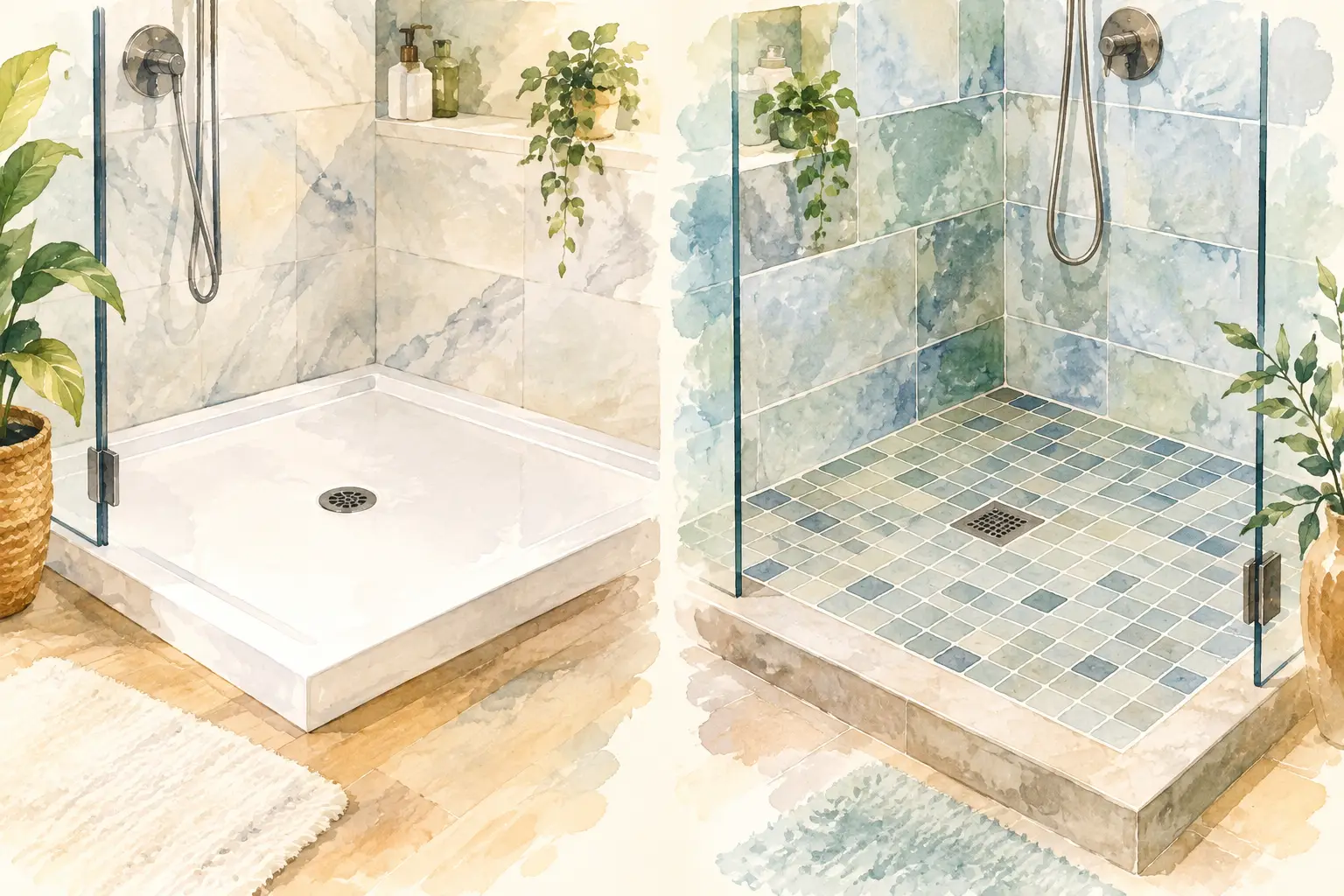
The shower base is especially important. It needs a stable, properly supported foundation with a slope that moves water toward the drain rather than allowing it to stand along an edge or in a low spot. In tiled showers, the waterproofing method must connect correctly to the drain assembly. In a shower with a custom pan or low-threshold base, the base itself must be designed to contain water and protect the floor below.
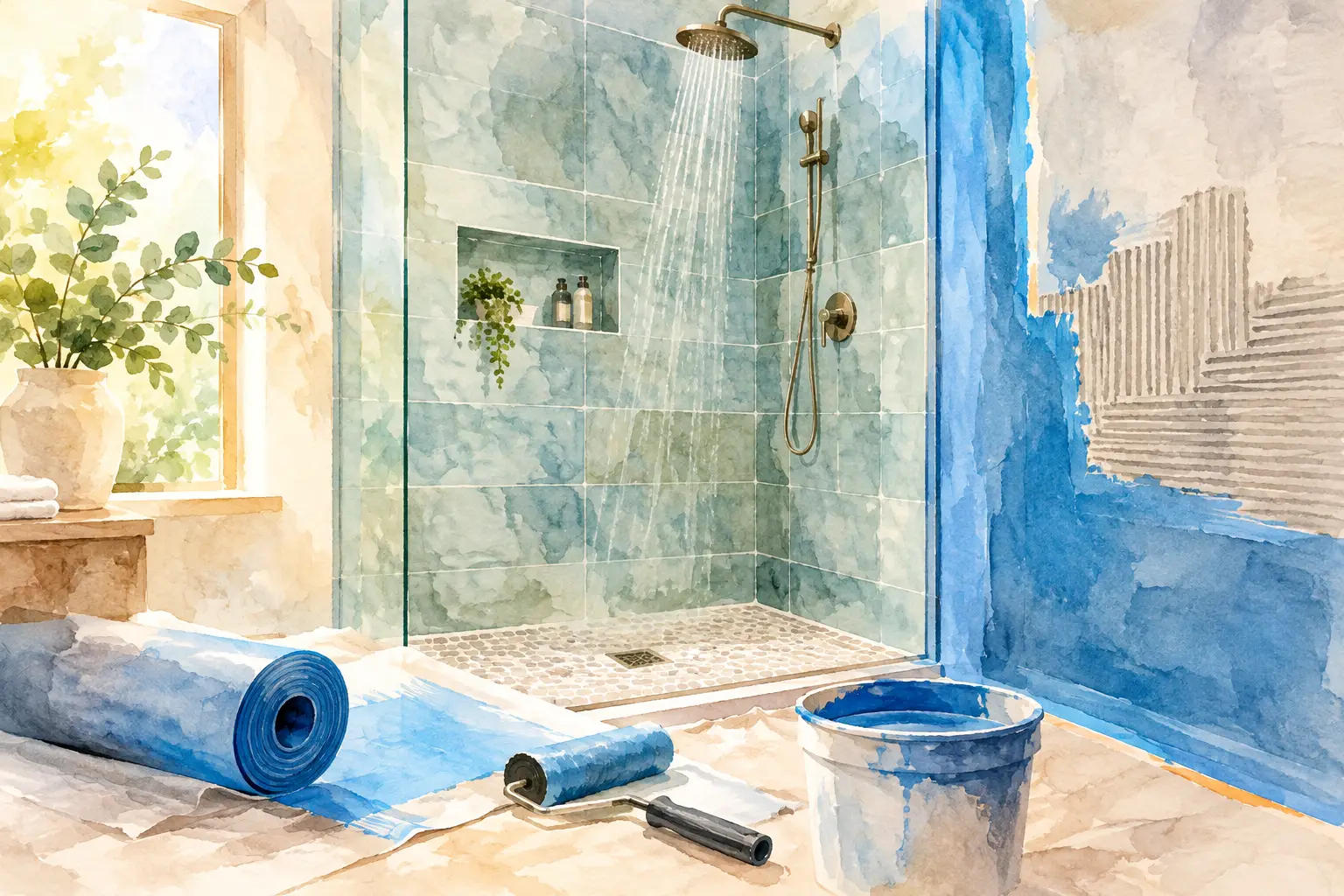
Walls need an approved moisture barrier or waterproof membrane, depending on the system being installed. Corners, seams, bench transitions, niches, and the wall-to-floor connection require special attention because these are the places where materials meet and move differently over time.
Finally, fixture openings must be sealed carefully. The areas around the shower valve, showerhead, grab bars, and doors are small, but they are not minor details. Skilled installation protects these points without compromising the clean look of the finished space.
Tile Is Beautiful, but It Is Not the Barrier
Tile is durable, versatile, and a great choice for a custom shower design. It is also a finish material, not the waterproofing system. Grout is porous to varying degrees, and grout lines can develop hairline cracks as a home settles or materials expand and contract.
That does not mean tile is a poor choice. It means the work behind the tile must be done right. A waterproof membrane or panel system provides the protection, while tile delivers the style homeowners see and enjoy. Skipping that hidden layer to reduce upfront cost can turn a beautiful shower into a future repair project.
Choosing the Right Waterproofing Approach
The best approach depends on the shower design, existing conditions, budget, and how quickly you want the project completed. A bathroom specialist should evaluate the whole bathing area before recommending a solution.
For a custom tiled shower, sheet membranes and liquid-applied membranes are common options. Sheet systems create a continuous physical barrier when seams are properly sealed. Liquid membranes are applied in coats and can work well around complex shapes, but they must be installed at the correct thickness and allowed to cure as specified.
Prefabricated wall panels and shower surrounds offer another dependable path. High-quality nonporous panels have fewer seams than tile and are naturally low maintenance. They can be an excellent fit for homeowners who want a polished, modern shower without the regular grout cleaning that comes with tile. The right installation still includes careful sealing at joints, corners, and the shower base.
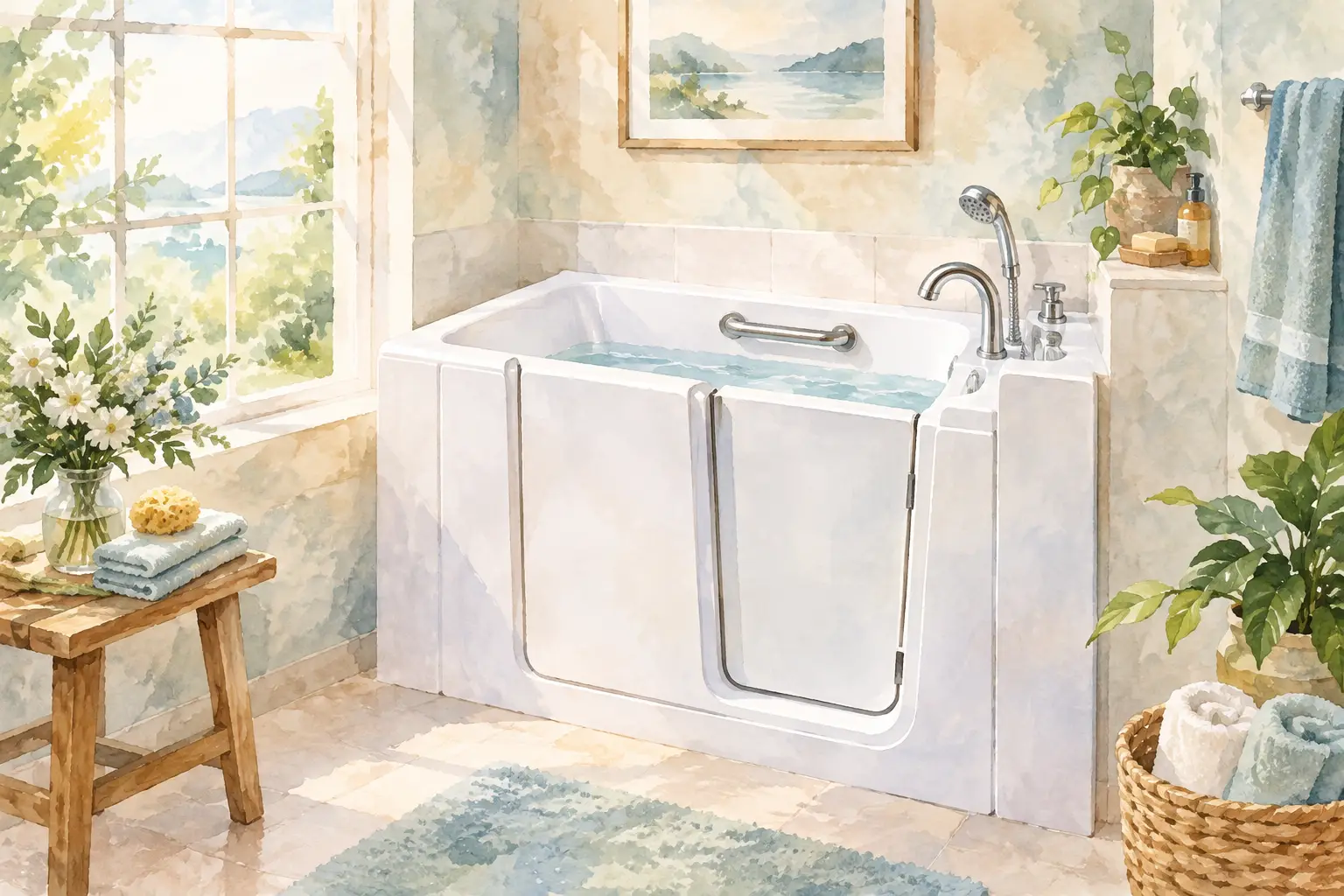
For aging residents or anyone planning for long-term comfort, a low-threshold shower can combine easier entry with dependable water control. The threshold and door or curtain arrangement need to match the base design. An accessible shower should make movement easier without creating a path for water to escape onto the bathroom floor.
Where Waterproofing Problems Usually Begin
Most failures do not happen in the middle of a wall. They begin at transitions: where the wall meets the pan, where a niche interrupts the wall, where a bench meets the surrounding surfaces, or where a door frame is secured. These are the details that separate a surface-level update from a shower built with lasting craftsmanship.
Recessed niches deserve particular care. They are convenient for shampoo and soap, but they create multiple corners and horizontal surfaces that must shed water. A properly constructed niche is waterproofed as part of the wall system and shaped so water does not linger on its lower ledge.
Shower doors also deserve a thoughtful plan. Frameless glass offers an open, upscale look, but it does not make a shower completely watertight by itself. The base slope, door placement, seals, and showerhead direction all work together to keep water where it belongs. In a compact bathroom, a well-designed surround or curtain may be the more practical choice.
What to Ask Before Your Shower Remodel Begins
Homeowners do not need to become waterproofing experts before scheduling a remodel. They do, however, deserve clear answers about the work hidden behind the finished shower.
Ask what waterproofing system will be used and how it connects to the shower base and drain. Ask how corners, seams, niches, and fixture openings will be handled. If your project includes a bench, grab bars, or a low-entry design, ask how those features will be supported and sealed.
It is also reasonable to ask about the condition of the existing walls and floor once the old shower is removed. A professional team should be prepared to identify deterioration that was concealed by the previous enclosure and explain the recommended path forward. The goal is not to add unnecessary work. It is to avoid covering a problem that could undermine the new shower.
Finally, ask about warranty coverage. Strong product and installation protection gives homeowners confidence that the company stands behind the materials and craftsmanship, not just the appearance of the finished space.
A Better Remodel Starts Below the Surface
A fast bathroom transformation should never mean rushing the details that protect your home. Some bath and shower updates can move quickly because experienced specialists use proven systems and focused installation processes. More customized work, especially a fully tiled shower with specialty features, may require additional preparation and curing time. The right timeline is the one that protects quality.
At Elite Bath Solutions, the goal is to pair the look you want with a shower system designed for dependable, low-maintenance performance. Whether you are replacing a worn tub, converting to a walk-in shower, or creating a more accessible bathing space, waterproof construction should be part of the conversation from the first design consultation.
Your shower should feel like a personal retreat, not a source of worry behind the walls. Choose materials you love, ask direct questions about the system underneath, and give hidden craftsmanship the same value as the finishes you can see.