A shower should leave you refreshed, not wondering why the bathroom floor feels soft near the wall or why a faint stain has appeared on the ceiling below. To prevent shower water damage, homeowners need to think beyond the visible shower surface. The biggest protection comes from a properly built enclosure, a dependable waterproofing system, and a few simple habits that keep water where it belongs.
For homeowners in Woodstock and throughout North Metro Atlanta, this matters even more in older bathrooms. Tile, grout, caulk, and tubs can look acceptable on the surface while moisture is slowly finding a path behind them. Addressing early warning signs can protect your home from a much larger, more disruptive renovation later.
Start With the Difference Between Water-Resistant and Waterproof
A bathroom has to manage water every day. That does not mean every material in the room is waterproof. This distinction is one of the most important things to understand when planning maintenance or a shower remodel.
Tile and grout are durable finish materials, but grout is not a waterproof barrier. It can absorb moisture. Caulk around corners, fixtures, and the edge of a tub or shower pan helps close small gaps, but it is not a substitute for a complete waterproof assembly behind the walls. When water gets through a failing joint or an improperly built enclosure, the damage may happen out of sight.
A professionally designed shower relies on layers working together: a correctly sloped base that directs water to the drain, waterproof protection behind wall finishes, sealed transitions, and a door or curtain that contains spray. Premium wall systems can make this protection easier to maintain because they reduce the number of grout lines where dirt, moisture, and upkeep tend to collect.
Watch for the Small Signs Before They Spread
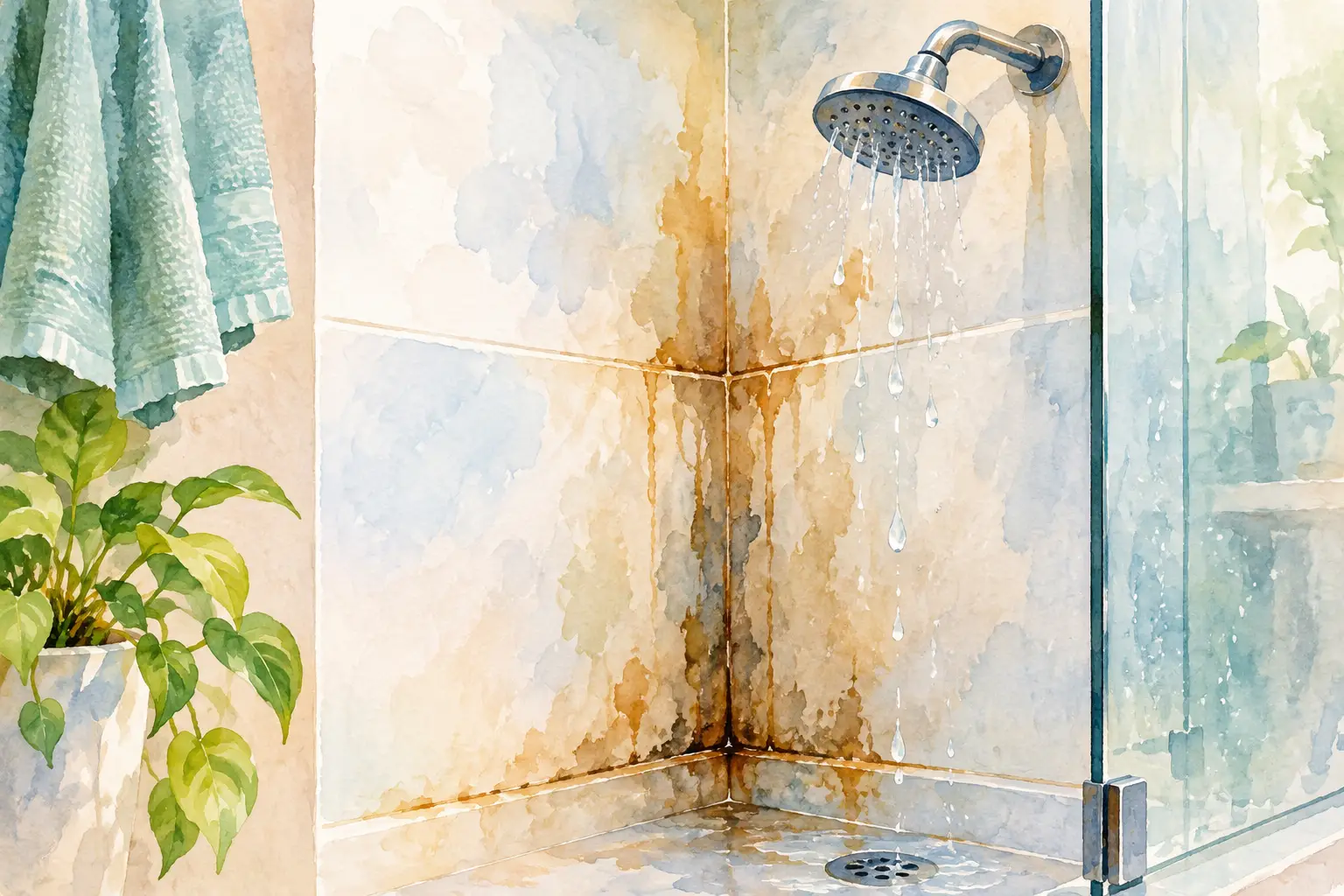
Water damage rarely announces itself with a dramatic flood. More often, it starts with a subtle change that is easy to dismiss. A musty odor after cleaning, peeling paint outside the shower, loose tile, discolored drywall, or caulk that repeatedly separates are all reasons to take a closer look.
Pay attention to the floor around the shower, especially near a curb, door track, or tub apron. Flooring that feels spongy, seams that lift, or recurring puddles can indicate that water is escaping the bathing area. In a second-floor bathroom, check the ceiling directly below the shower for staining, bubbling paint, or a patch that feels unusually soft.
Do not assume a little discoloration is simply cosmetic. Surface staining may be minor, but recurring moisture is a condition worth addressing at its source. The longer materials stay damp, the more likely they are to deteriorate.
Keep Water Inside the Shower Every Day
The easiest way to protect a bathroom is to limit the water that reaches its vulnerable edges. A shower curtain should sit inside the tub or shower basin while in use, not drape over the outside edge where water can run onto the floor. Replace a curtain liner that is torn, stiff, or too short to do its job.
With a glass enclosure, check that the door closes squarely and that its bottom sweep and side seals are intact. A worn door sweep can allow a surprising amount of water onto the floor during a normal shower. Frameless doors create a clean, open look, but they still need proper placement, quality seals, and reasonable expectations. No glass door design is meant to contain direct, high-pressure spray aimed at an open gap.
After bathing, use a towel or squeegee to remove standing water from the threshold and glass. This takes less than a minute and reduces mineral buildup while helping you notice changes, such as water collecting in a place it did not before.
Maintain Caulk, Grout, and Seals With Purpose
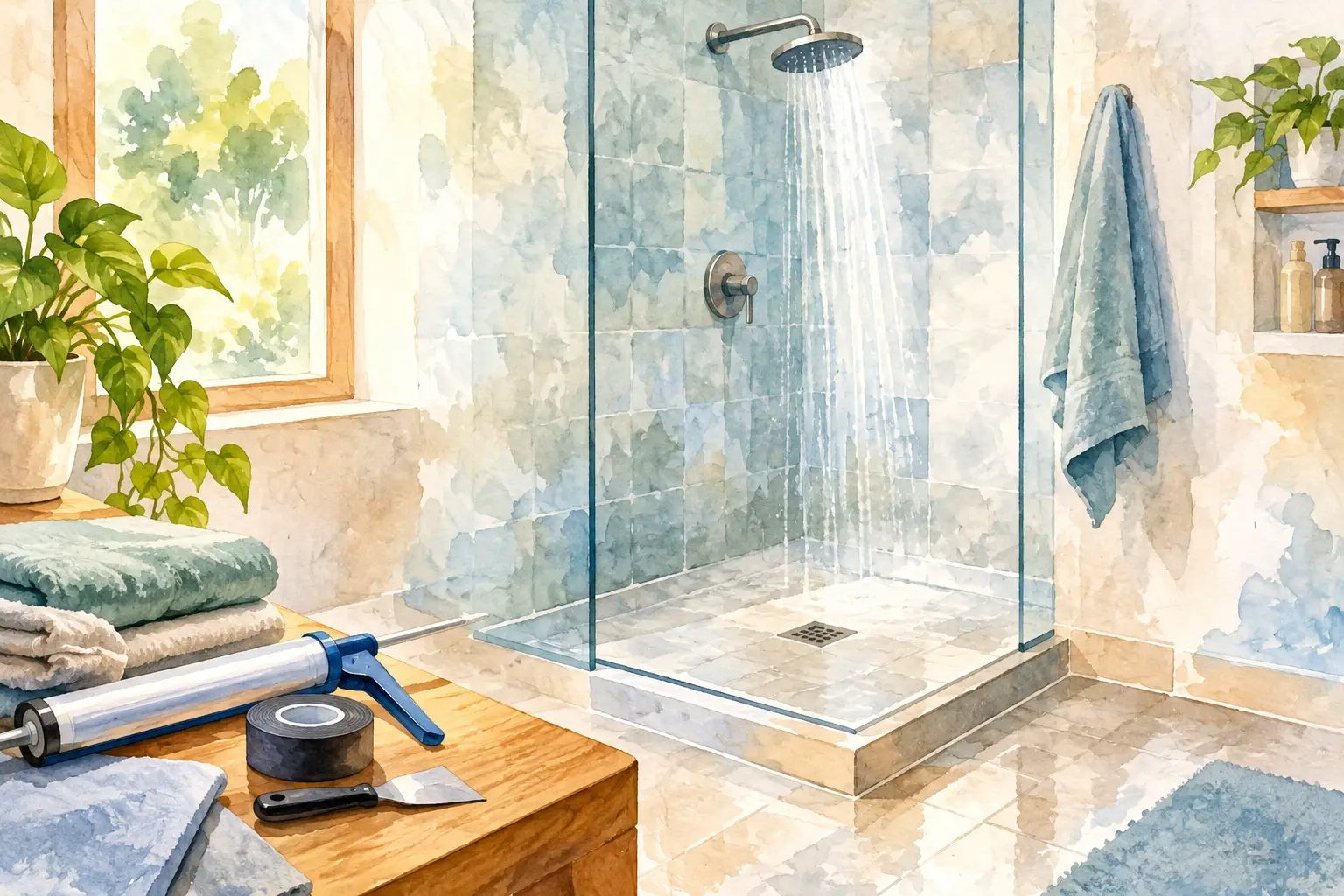
Caulk is a maintenance item, not a permanent feature. It can shrink, crack, discolor, or pull away as a home naturally shifts and materials expand or contract. Inspect it around the shower base, vertical corners, glass panels, and where the tub meets the wall. If a bead is split or missing, it should be removed and replaced correctly rather than covered with another layer.
Grout deserves regular cleaning, particularly in older tiled showers. Use products suited to the surface and avoid harsh abrasives that can wear down finishes. Sealing grout may help reduce staining and moisture absorption in some installations, but it does not repair cracked grout or solve an underlying waterproofing problem.
If caulk or grout keeps failing in the same area, treat that as a clue rather than a chore. Repeated failure can point to movement, trapped moisture, poor drainage, or a shower assembly that needs a more complete solution.
Control Humidity After the Shower Ends
Water does not have to escape the enclosure to affect a bathroom. Steam settles on walls, ceilings, mirrors, and cabinetry, especially in smaller bathrooms with limited airflow. Over time, repeated humidity can contribute to peeling paint, swollen trim, and mildew growth on surfaces.
Run the bathroom exhaust fan during the shower and continue running it after you finish. A good rule is to leave it on for about 20 minutes, though larger bathrooms and longer showers may need more time. If your fan is noisy, weak, or rarely used because it does not seem effective, improving ventilation can be a worthwhile part of a bathroom update.
Open the shower door or curtain after use so the enclosure can dry. Keep bath mats off the floor until they are dry, and avoid storing damp towels in a closed bathroom for long periods. These small changes support a cleaner space and reduce the constant moisture load on nearby finishes.
Make Sure Water Has a Clear Path to the Drain
Standing water in a shower is more than an annoyance. It can signal a drainage issue, a worn shower floor, or a slope that is not directing water where it should go. Water should move toward the drain, not pool in corners, along the curb, or at the edge of a tub.
Keep the drain cover clear of hair and soap residue so water can flow freely. If the shower regularly drains slowly, avoid relying on aggressive chemical products that can be hard on finishes. Persistent drainage concerns deserve professional attention before they become a reason for water to overflow or sit against vulnerable seams.
The shower base itself is equally important. A modern replacement shower with an integrated, properly sloped base creates a reliable foundation for daily use. This is especially valuable for busy family bathrooms, where frequent showers leave little time for surfaces to dry between uses.
Prevent Shower Water Damage During a Remodel
A remodel is the best time to correct the weaknesses that routine maintenance cannot solve. If your shower has aging tile, a cracked pan, persistent leaks around the enclosure, or walls that are difficult to keep clean, replacing one visible piece may not be enough. The lasting value is in the preparation behind the finished surface.
Ask what waterproofing system will be used, how wall-to-base transitions are protected, and how the shower floor directs water to the drain. You should also discuss easy-clean wall options, low-threshold entries, glass choices, built-in seating, and storage that keeps bottles off the shower floor. The right design can improve safety and comfort while reducing the areas that demand constant upkeep.
There are trade-offs. Custom tile offers a highly personalized look, but it generally comes with more grout and more ongoing maintenance. Low-maintenance wall systems offer fewer seams and a polished finish, although the available patterns and layout options may differ from tile. The best choice depends on your style, budget, cleaning preferences, and how long you plan to enjoy the bathroom.
At Elite Bath Solutions, bath and shower spaces are designed around the details that protect both daily comfort and the home itself. Quality materials and expert craftsmanship matter because a beautiful shower should perform as well as it looks.
Build a Simple Monthly Shower Check
A quick monthly check can help you catch problems before they become expensive. Look at the caulk line, shower door sweep or curtain liner, grout condition, floor outside the enclosure, and the ceiling below the bathroom if applicable. Notice whether the shower is draining as quickly as usual and whether the exhaust fan clears steam effectively.
You do not need to worry over every water spot. A splash from an energetic child or a damp bath mat is normal. The concern is repeated moisture in the same location, especially when it is paired with staining, odors, soft materials, or separating finishes.
A well-built shower gives you more than an attractive place to start and end the day. It gives you confidence that the water used there stays contained, drains correctly, and does not quietly compromise the rooms around it. When your current shower can no longer offer that confidence, a thoughtfully planned update can turn a daily worry into a lasting comfort.