A walk-in tub can solve one problem and create another if you choose the wrong model. The right tub can make bathing safer, easier, and far more comfortable. The wrong one can feel cramped, take too long to fill, or leave you paying for features you never use. That is why a practical guide to choosing walk in tubs should start with how you live, not just what looks good in a showroom.
For many homeowners in Woodstock and the greater Atlanta area, the decision is about more than accessibility. It is also about staying in the home you love, reducing maintenance, and turning an outdated bathroom into a space that feels secure and polished. A walk-in tub is a meaningful upgrade, but only when the fit is right.
What matters most in a guide to choosing walk in tubs
The best place to start is with the reason you want one. Some homeowners are focused on safety after a fall or a mobility change. Others want relief for sore joints, easier bathing, or a bathroom that feels more supportive as they age. Those goals should shape every choice that follows.
A tub with a low threshold and built-in seat may be enough for one household. Another may need hydrotherapy jets, hand-held shower options, or a wider door opening for easier entry. There is no single best walk-in tub for everyone. The better question is which tub best matches your space, your comfort preferences, and your long-term needs.
That is also where expert guidance matters. A specialized bath remodeler can help you avoid overbuying, underplanning, or selecting a tub that looks impressive on paper but does not work well in your actual bathroom.
Start with safety, but do not stop there
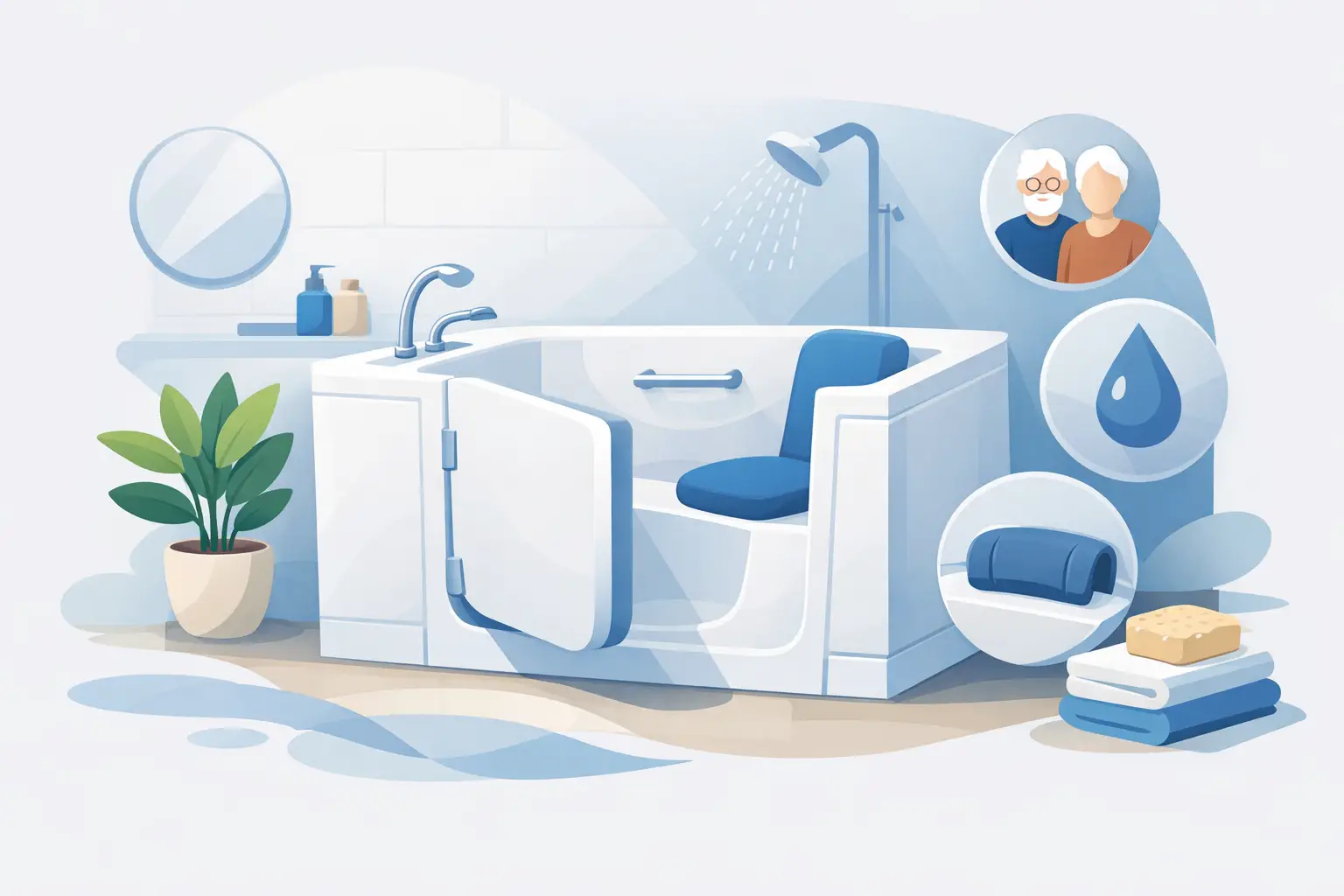
Safety is the feature most people think about first, and for good reason. A walk-in tub should reduce the strain and risk that come with stepping over a traditional tub wall. A low entry threshold, secure grab bars, a built-in seat, and slip-resistant flooring are the essentials.
But safety is not only about getting in and out. It is also about how stable and comfortable you feel while bathing. A well-designed seat height, easy-to-reach controls, and a hand shower that does not require twisting or stretching can make a major difference. If you have arthritis, back pain, or limited balance, these smaller details often matter just as much as the door.
You should also think about who will use the tub now and who may use it later. If this is a long-term aging-in-place decision, it makes sense to choose a model that supports changing mobility needs instead of only your current routine.
Look for features that feel intuitive
A good walk-in tub should not feel complicated. Controls should be easy to read and simple to operate. The door should latch securely without requiring too much force. If a feature seems awkward during a consultation, it will not become more convenient at home.
That is one of the most overlooked parts of the buying process. Homeowners sometimes focus on the feature list and not enough on day-to-day use. Comfort and confidence matter.
Size, layout, and bathroom fit
Not every bathroom can accept every tub. Before comparing finishes and upgrades, make sure the tub can fit the room properly without making the space feel tight or difficult to move through.
A walk-in tub replacement is often straightforward when it is going into an existing tub footprint, but dimensions still matter. Door swing, wall clearance, faucet placement, and surrounding floor space all need to be considered. If the bathroom already feels cramped, the wrong tub can make that worse.
This is where a consultation is especially valuable. Measurements alone do not tell the full story. A bathroom specialist can evaluate how the tub will function in the space, how installation will affect surrounding surfaces, and whether a different layout would deliver a better result.
Comfort features worth considering
Once the basics are covered, comfort becomes the next layer. This is where homeowners often see the difference between a purely functional product and one that truly improves daily living.
Hydrotherapy jets can be a great fit for people with muscle tension, joint stiffness, or circulation concerns. Heated backrests add comfort, especially if you do not want to feel chilled while the tub fills. Fast-drain technology is another practical feature because it shortens the time spent waiting after a bath.
Still, not every comfort upgrade is equally useful for every buyer. If you rarely take long baths, a basic safety-focused model may be the smarter investment. If bathing is part of pain management or relaxation, enhanced therapy features may be worth it. The key is to be honest about how you will use the tub rather than choosing features just because they sound premium.
Think about cleaning and maintenance
A walk-in tub should make life easier, not create another hard-to-maintain surface in the bathroom. Materials matter here. Nonporous, durable surfaces are easier to keep clean and tend to hold their appearance better over time.
You should also ask about the design around the door seal, jets, and hardware. Some tubs are easier to wipe down and maintain than others. If low maintenance is a priority, that should be part of the selection process from the beginning.
For many homeowners, this point is bigger than it seems. A bath upgrade is not just about the first week after installation. It is about how the space performs year after year. A tub that looks beautiful but requires constant upkeep may not feel like much of an upgrade after a few months.
Installation quality is part of the product
Even an excellent tub can disappoint if the installation is rushed or handled by a contractor without specialized bath experience. Walk-in tubs involve plumbing, fit, waterproofing, and finish details that need to be done right the first time.
That is why choosing the installer is just as important as choosing the tub. A bath-focused company understands how to manage the full project efficiently, keep the space clean, and deliver a finished result that looks intentional rather than pieced together. Fast installation is valuable, but only when it comes with craftsmanship and long-term reliability.
A strong warranty also matters. It speaks to the confidence behind the products, labor, and materials. For a purchase like this, peace of mind is not a bonus. It is part of the value.
Budget, financing, and long-term value
Cost is part of every remodeling decision, and walk-in tubs are no exception. The lowest price is not always the best value if it means giving up durability, safety features, or installation quality. At the same time, the most expensive option is not automatically the best fit.
A better way to think about budget is to balance immediate cost with daily benefit. Will the tub make bathing safer? Will it help you stay in your home longer? Will it reduce the stress of using an outdated bathroom? Those gains have real value.
Financing can also make the project more manageable, especially for homeowners who want to address safety now rather than delay the upgrade. If a company offers clear pricing, guided recommendations, and practical payment options, that usually makes the process less stressful from the start.
How to compare options without getting overwhelmed
If you are comparing several tubs, keep the decision simple. Focus on safety, fit, comfort, maintenance, and installation quality before anything else. Those are the factors that most affect daily satisfaction.
You should also pay attention to how the consultation feels. Are the recommendations tailored to your bathroom and your needs, or are you being pushed toward a one-size-fits-all package? A quality remodeling experience should feel informative and reassuring, not pressured.
For homeowners who want a polished result without a long, disruptive renovation, working with a bath specialist like Elite Bath Solutions can make the process much more straightforward. Specialized guidance often leads to a better fit, a faster timeline, and more confidence in the finished space.
A guide to choosing walk in tubs for the long run
The best walk-in tub is not the one with the longest feature list. It is the one that fits your home, supports your routine, and makes your bathroom feel safer and more comfortable every day. That may mean a straightforward model with essential safety features, or it may mean a more luxurious option that brings therapy and relaxation into the space.
Either way, the right decision usually comes from asking better questions, not chasing more upgrades. If a tub helps you feel secure, comfortable, and confident in your own bathroom, it is doing exactly what it should – and that is a smart upgrade to live with for years.