A shower can leak long before water appears on the bathroom floor. A failed seal around the shower base, a cracked grout line, or a slow drip behind the wall may send moisture into places you cannot see. So, can shower leaks cause mold? Yes. When moisture remains trapped in wall cavities, flooring, or framing, mold can begin growing in as little as 24 to 48 hours under the right conditions.
For homeowners in Woodstock and across North Metro Atlanta, that is more than a cosmetic bathroom issue. Hidden shower leaks can damage drywall, loosen tile, stain ceilings below the bath, and create a repair that grows more expensive with every week it goes unnoticed. The encouraging news is that early action can protect both your home and your peace of mind.
Can Shower Leaks Cause Mold Behind Walls?
Mold needs three basic things to grow: moisture, a food source, and time. Bathrooms supply all three. Humid air is common, while drywall paper, wood framing, dust, caulk, and other organic materials can provide a surface for mold to feed on. A properly built shower should keep liquid water inside the bathing area and direct it to the drain. When that waterproof barrier fails, moisture can reach materials that were never designed to stay wet.
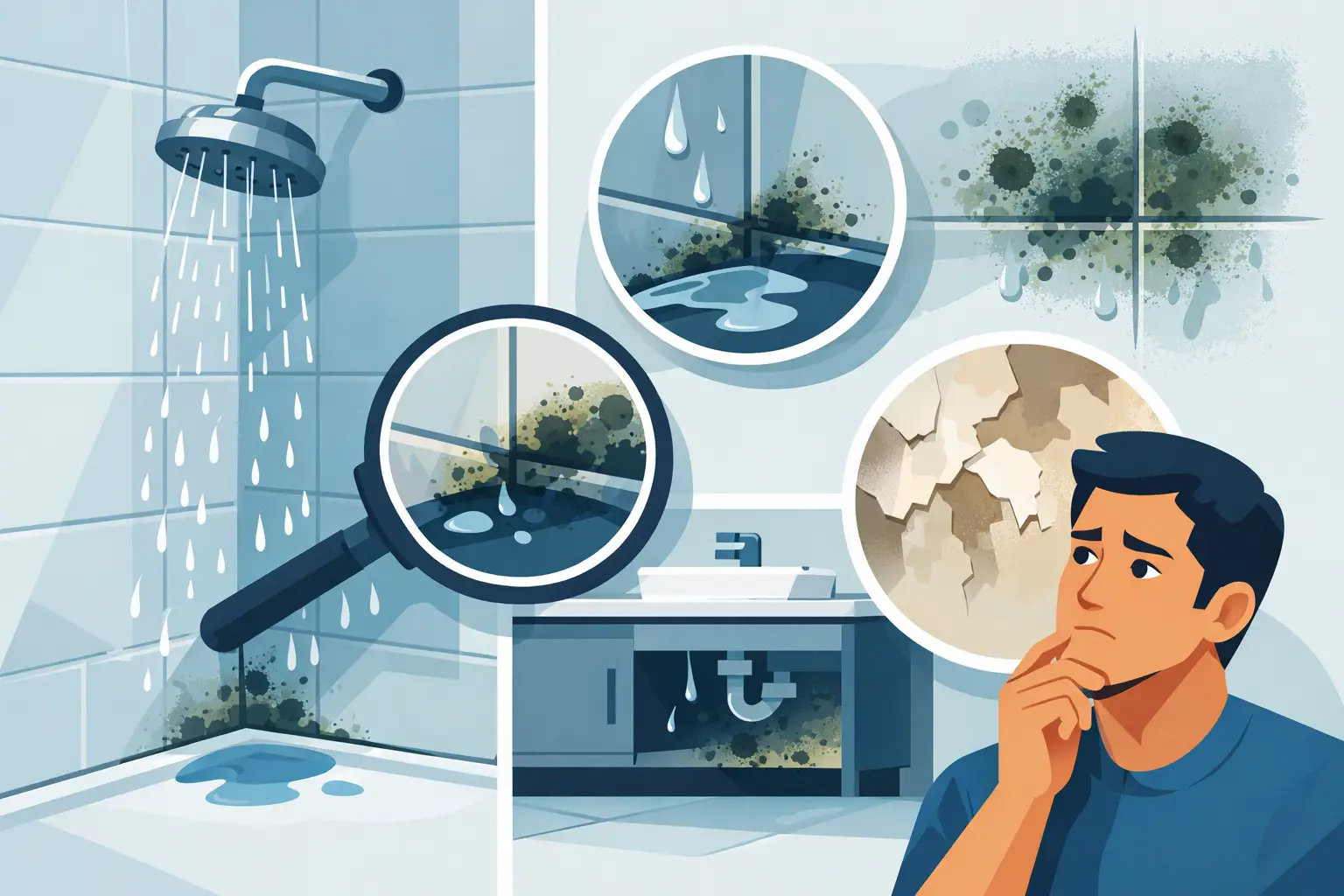
The leak does not have to be dramatic. A slow failure around a valve, shower door, drain, or worn-out caulk line can repeatedly wet the same hidden area. Because it never has a chance to dry fully, the moisture can support mold growth behind a shower surround, beneath a shower pan, or inside the wall shared with another room.
Surface mildew near the corners of a shower is common and may simply reflect poor ventilation or inconsistent cleaning. Hidden mold from a plumbing or shower leak is different. It usually keeps returning after cleaning, spreads beyond the obvious wet area, or is accompanied by signs of material damage.
The Warning Signs Homeowners Should Not Ignore
Your bathroom may be telling you that water is escaping where it should not. A musty odor that lingers after the room has aired out is one of the most common clues. Mold can be hidden, but its odor often travels through gaps around plumbing fixtures or behind baseboards.
Watch for peeling paint on a wall next to the shower, soft or swollen drywall, loose floor tiles, cracked grout that keeps reopening, or a shower base that feels unstable underfoot. Discoloration on the ceiling below an upstairs bathroom deserves immediate attention too. Even a small yellow-brown stain can indicate a leak that has been active for some time.
Other signs are less obvious. If caulk is pulling away from the tub or shower wall, water may be entering behind it. If the bathroom floor feels spongy near the shower threshold, the subfloor could be holding moisture. A sudden increase in your water bill may point to a plumbing leak, while a persistent damp smell near the vanity or adjacent closet may mean water has migrated farther than expected.
None of these symptoms automatically confirms mold. They do, however, justify a closer inspection. Waiting for visible black or green growth is rarely the best strategy. By then, the underlying moisture problem may have already affected more of the bathroom than you can see.
Where Shower Leaks Usually Start
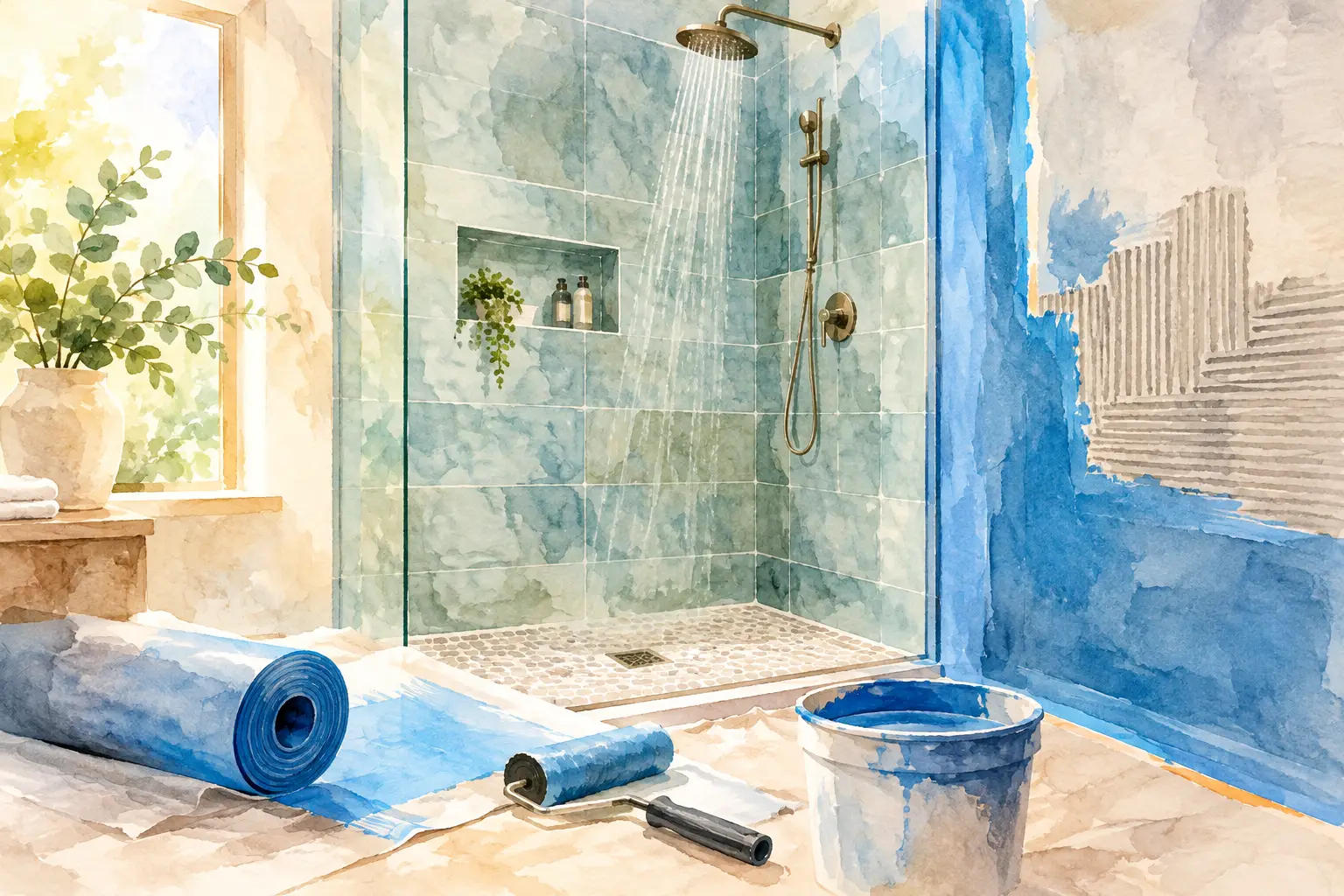
A shower is a system, not just a set of attractive surfaces. Tile, wall panels, grout, doors, plumbing fixtures, drainage components, and the waterproof layer beneath the finished surface all need to work together. Leaks commonly develop at transition points where those elements meet.
Old or cracked caulk can allow water to work behind a tub surround or along the shower threshold. Deteriorated grout can also let moisture pass through, especially if the waterproofing behind the tile was poorly installed or has failed over time. It is worth remembering that grout and tile are not the main waterproof barrier in a tiled shower. The waterproofing behind or beneath them does the real protective work.
A damaged shower pan, loose drain connection, or failed door sweep can send water below the shower surface. Leaks around the mixing valve or showerhead pipe may wet the wall cavity every time someone showers. In older bathrooms, repeated movement, aging materials, and past repairs can all contribute to these failures.
What to Do If You Suspect a Shower Leak
Start by limiting additional moisture. Avoid using the shower if you notice active leaking, a soft floor, a ceiling stain below the bathroom, or water appearing outside the shower enclosure. If the issue seems to be a minor caulk failure, do not assume fresh caulk alone will solve it. First make sure the area behind the joint is dry and that no larger installation or plumbing issue is causing the failure.
A simple observation can help narrow down the source. Check whether water appears only when the shower is running, only when the drain is used, or even when no one is bathing. Water appearing while the shower runs but before it reaches the drain may suggest a wall, fixture, or enclosure issue. Water that shows up primarily after draining may point toward the pan or drain assembly. These clues are useful, but they are not a substitute for a professional assessment when damage is suspected.
If you see a small amount of mold on a nonporous surface, clean it carefully using an appropriate bathroom cleaner and dry the area completely. Do not paint over staining, cover a soft wall with new material, or install new tile over an unresolved leak. Those shortcuts can trap moisture and turn a manageable repair into a larger demolition project.
When mold growth is extensive, materials are soft or damaged, or occupants have health concerns related to mold exposure, consider contacting a qualified mold remediation professional. The moisture source must be corrected first or the problem is likely to return.
Why a Proper Shower Upgrade Can Prevent Repeat Problems
A repair can be the right answer when the issue is isolated and the existing shower is otherwise in good condition. But repeated caulk failures, cracked tile, a leaking pan, or an aging shower that is difficult to clean may signal that the system has reached the end of its useful life. In that case, replacing only the visible problem area can create a patchwork solution without addressing what is happening underneath.
A professionally planned shower renovation gives homeowners the opportunity to replace worn materials with a fully waterproof system designed for daily use. Modern wall surrounds have fewer joints to maintain than traditional tile, while custom shower options can improve drainage, accessibility, and cleaning convenience. The best choice depends on your bathroom layout, how long you plan to stay in the home, and whether safety features such as a low threshold, built-in seating, or grab bars would make bathing more comfortable.
For many homeowners, the value is not simply a new look. It is the confidence that the shower is built to manage water properly, with premium materials and expert installation supporting long-term performance. Elite Bath Solutions helps Atlanta-area homeowners transform outdated bathing spaces into polished, low-maintenance showers that are made for everyday life.
Keep Moisture From Becoming a Mold Problem
Even a well-built shower benefits from regular care. Run the bath fan during every shower and leave it on long enough afterward to clear humidity. If your fan is weak, noisy, or ineffective, upgrading ventilation may be worthwhile. Wipe standing water from glass doors and shower ledges, and inspect caulk and grout periodically instead of waiting for visible damage.
Pay special attention to changes. A new musty smell, a door that begins sticking near the bathroom, recurring mildew in one spot, or a floor that feels different underfoot can all be early warnings. Catching a leak before moisture reaches framing or adjacent rooms is one of the simplest ways to preserve your bathroom investment.
Your shower should be a place to start and end the day in comfort, not a hidden source of worry. If something feels off, trust that instinct and have the cause identified before a small leak has the opportunity to become a larger mold and water-damage problem.