A brown mark on the ceiling below the bathroom, a soft baseboard beside the shower, or a musty smell that never quite leaves are more than cosmetic annoyances. They are often the first clues to why showers leak – and why waiting can turn a contained bathroom issue into damaged drywall, flooring, framing, and finishes.
A shower is exposed to water every day, so it must do more than look polished. Behind the wall panels, tile, doors, and fixtures, each layer needs to guide water back into the shower and keep moisture out of the home. When one part of that system fails, water finds the path of least resistance. The visible wet spot may be several feet from the actual source.
Why Showers Leak: The Most Common Causes
Failed caulk and worn seals
Caulk creates a flexible seal where different materials meet, including the seam between a shower wall and base, around trim, and at the edges of a shower enclosure. It is designed to handle normal movement, but it does not last forever. Over time, caulk can dry out, crack, shrink, or pull away from the surface.
Door sweeps and seals can wear down as well. If water escapes around a shower door or splashes through a gap at the bottom, it may repeatedly soak the floor just outside the enclosure. This kind of leak is often easier to spot because it appears during or immediately after a shower. Even so, repeated moisture at the same edge can damage flooring and subflooring over time.
Cracked grout is a warning, not always the whole problem
Grout is durable, but it is not waterproofing. It fills the spaces between tiles and helps create a finished, cleanable surface. Hairline cracks, missing sections, or persistent discoloration can let more moisture reach the materials behind the tile.
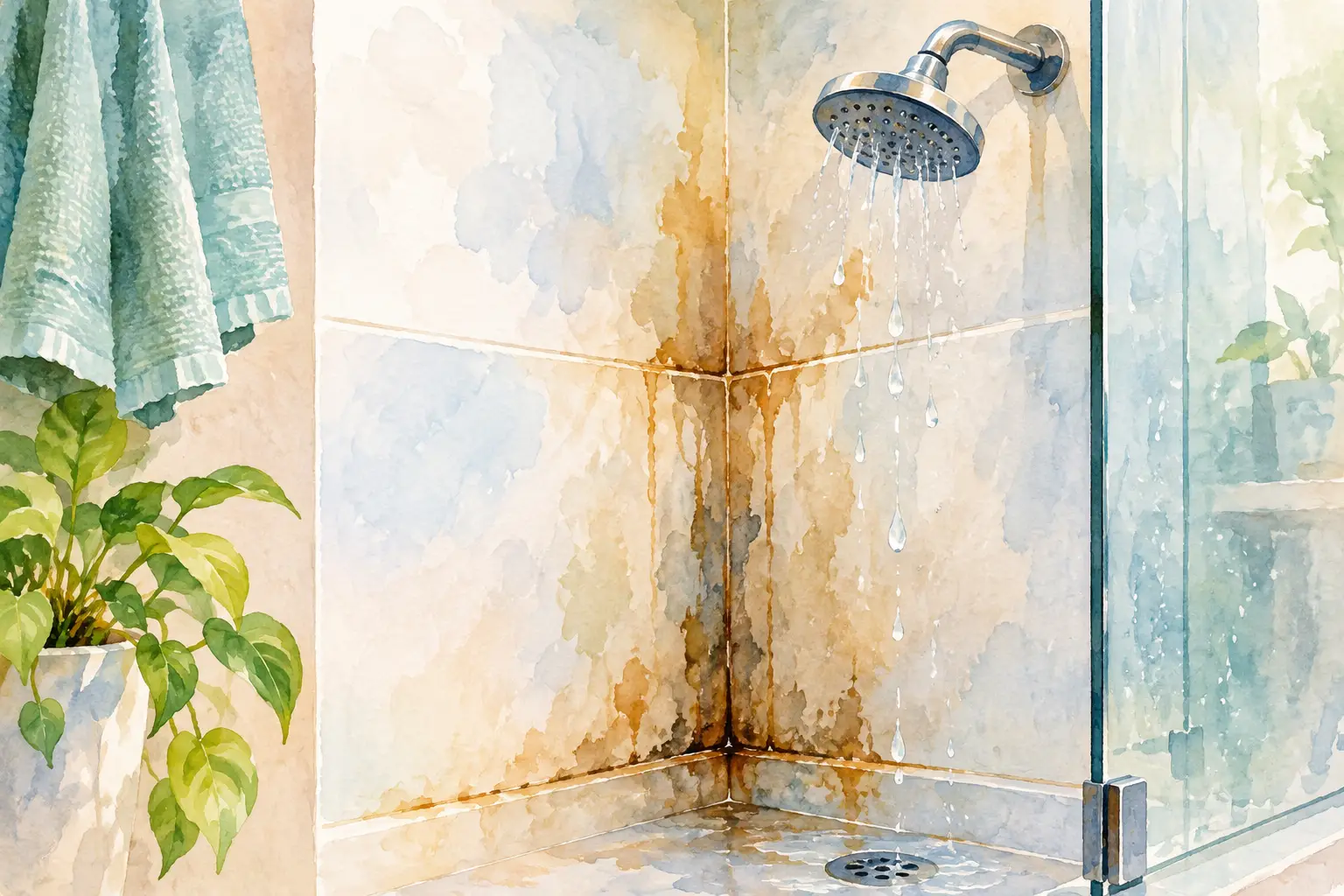
The bigger concern is what sits beneath that tile. In a properly built shower, a waterproof layer directs moisture safely toward the drain. If the waterproofing behind aging tile has failed, patching grout may improve the appearance without solving the reason water is reaching the wall cavity. This is why a recurring grout problem deserves a closer look rather than endless touch-ups.
A failing shower pan or drain connection
The shower pan is the waterproof base under the shower floor. In tiled showers, it is hidden beneath the finished surface. A damaged pan, an improperly constructed slope, or a compromised connection around the drain can allow water to travel underneath the floor.
These leaks may be difficult to identify because the shower can appear perfectly normal from above. You may notice loose floor tile, a damp ceiling in the room below, darkened flooring nearby, or a musty odor after the bathroom has been used. Water that collects below the surface rarely stays in one place, which makes early attention especially valuable.
Water escaping where the walls meet the base
The joint where the shower walls meet the base is a high-stress area. Homes naturally shift slightly with seasonal temperature changes, and shower materials expand and contract with use. When that transition is not properly sealed or supported by a reliable waterproofing system, water can move behind the wall surface.
This is common in older showers with multiple seams, aging surrounds, or tile installations that have seen decades of daily use. It can also happen when a previous update focused on the visible finish but did not address the structure behind it.
Poor ventilation and lingering moisture
Not every bathroom moisture issue is a direct shower leak. Steam from hot showers can condense on walls, ceilings, trim, and windows, especially in a bathroom with limited ventilation. That moisture can contribute to peeling paint, mildew, swollen trim, and a persistent damp feeling.
The distinction matters. A ventilation issue often affects broad areas of the room and improves as the bathroom dries out. A shower leak tends to create a consistent wet zone near the enclosure, on an adjoining wall, or below the bathroom. In some homes, both conditions are present, allowing moisture damage to accelerate.
Signs Your Shower May Be Leaking Behind the Surface
A leak does not always announce itself with a puddle. Watch for paint that bubbles or peels near the shower, grout that keeps cracking in the same area, loose tile, stained ceilings, warped baseboards, or flooring that feels soft underfoot. A stale, earthy odor can also suggest moisture has been trapped where it should not be.
Pay attention to timing. If an area becomes damp only after someone uses the shower, the shower enclosure is a likely source. If it appears after a bath, the tub surround, overflow area, or wet wall may be involved. If the problem is present regardless of use, the moisture source may be elsewhere in the bathroom or adjoining space.
For homeowners in Woodstock and across North Metro Atlanta, it can be tempting to dismiss these changes in an older bathroom as normal wear. Some wear is expected. But soft surfaces, recurring stains, and visible deterioration are not simply part of owning an older home. They are signals that the bathroom may no longer be protecting the surrounding structure as intended.
When a Simple Update Can Help, and When It Cannot
A narrow, isolated gap in otherwise sound caulk may call for routine maintenance. A worn door sweep can often be replaced before it causes larger trouble. These are surface-level issues that can be monitored once corrected.
The decision changes when signs point behind the finished surface. Repeatedly failing grout, water stains on an adjacent ceiling, loose tiles, a deteriorating shower base, or a persistent odor may indicate that the shower’s waterproofing system has reached the end of its useful life. In that situation, adding more caulk or applying a cosmetic coating can delay a better solution while moisture continues to travel out of sight.
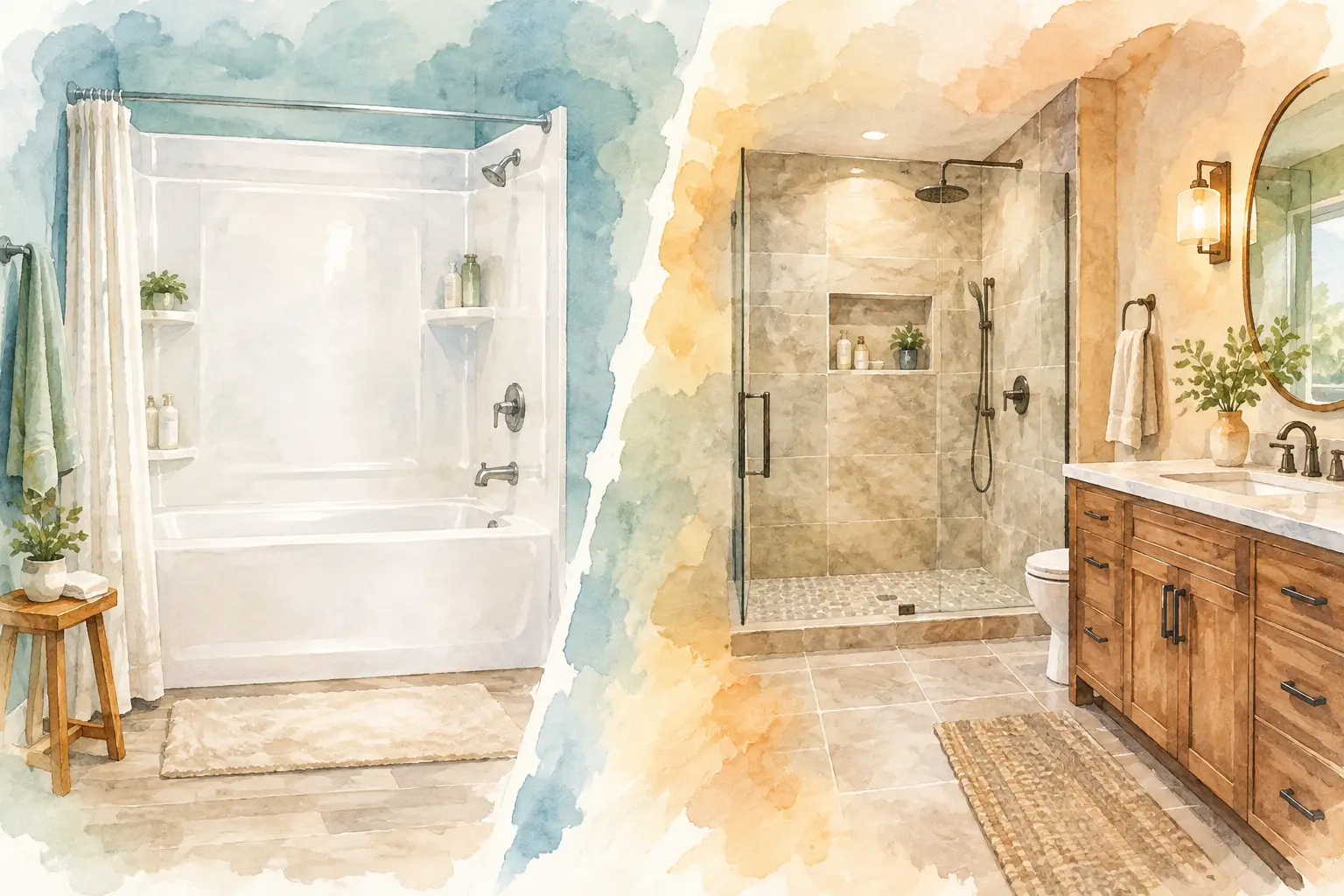
A full shower replacement is not always the answer, but it is often the most dependable option when multiple components are aging at once. Replacing the enclosure allows the shower to be rebuilt with a properly integrated base, walls, seams, and drain area rather than asking an outdated system to keep performing beneath new finishes.
The Value of a Modern, Waterproof Shower System
A well-planned shower remodel is about more than a fresh color or updated fixtures. It is an opportunity to replace hard-to-clean, failure-prone surfaces with premium materials designed for daily water exposure. Modern wall systems can reduce the number of grout lines, while a solid shower base and carefully finished seams create a more dependable barrier against moisture.
There are practical lifestyle benefits, too. A low-threshold shower can make entry easier for aging homeowners and guests. Built-in seating, safety features, storage, and a layout that feels less cramped can turn a daily routine into a more comfortable experience. The best design balances these upgrades with the bathroom’s size, the household’s needs, and the level of maintenance the homeowner wants long term.
Elite Bath Solutions approaches shower transformations as complete bath-and-shower projects, not surface makeovers. That specialized focus helps homeowners move from a worn, uncertain shower to a clean, low-maintenance space built for comfort and backed by lasting confidence.
How to Protect Your Bathroom Before Damage Spreads
Do not ignore a pattern simply because it seems small. Take photos of stains or damp areas, note when they appear, and avoid covering up soft or discolored surfaces with paint alone. Keep the bathroom well ventilated after showers and wipe standing water from door tracks and outside edges of the enclosure.
Most importantly, look at the shower as a system. A beautiful shower should also keep water where it belongs, stand up to daily use, and make your home feel more secure. When the warning signs keep returning, a thoughtfully designed replacement can provide the peace of mind and personal comfort an outdated bathroom can no longer deliver.