If you are planning to renovate your bathroom, one of the first questions you will probably ask is, what is a realistic budget for a bathroom remodel? For a professionally completed project in the United States, a realistic budget can range from several thousand dollars for limited updates to $25,000 or considerably more for extensive renovations. The final amount depends on the bathroom’s size, the scope of work, local labor rates, material choices, and whether plumbing or structural changes are required.
For a professionally completed bathroom remodeling project in the Atlanta market, a realistic budget typically ranges from $20,000 to $35,000 for a midrange remodel. More extensive upscale renovations can cost $50,000 to $80,000 or more, depending on the bathroom’s size, project scope, materials, fixtures, and any plumbing or structural changes required.
For many Atlanta homeowners, a midrange bathroom remodel offers the best balance between cost, functionality, and long-term value. Current market data indicates that homeowners may recover approximately 65–75% of the cost of a quality midrange bathroom remodel at resale, compared with roughly 45–60% for upscale renovations.
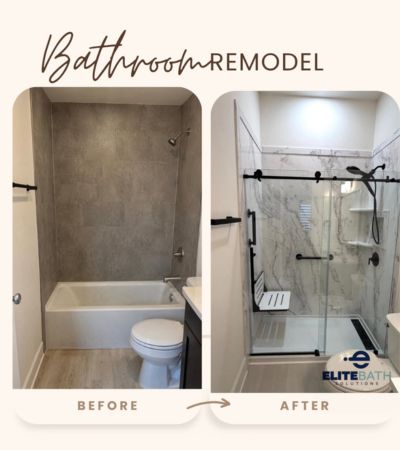
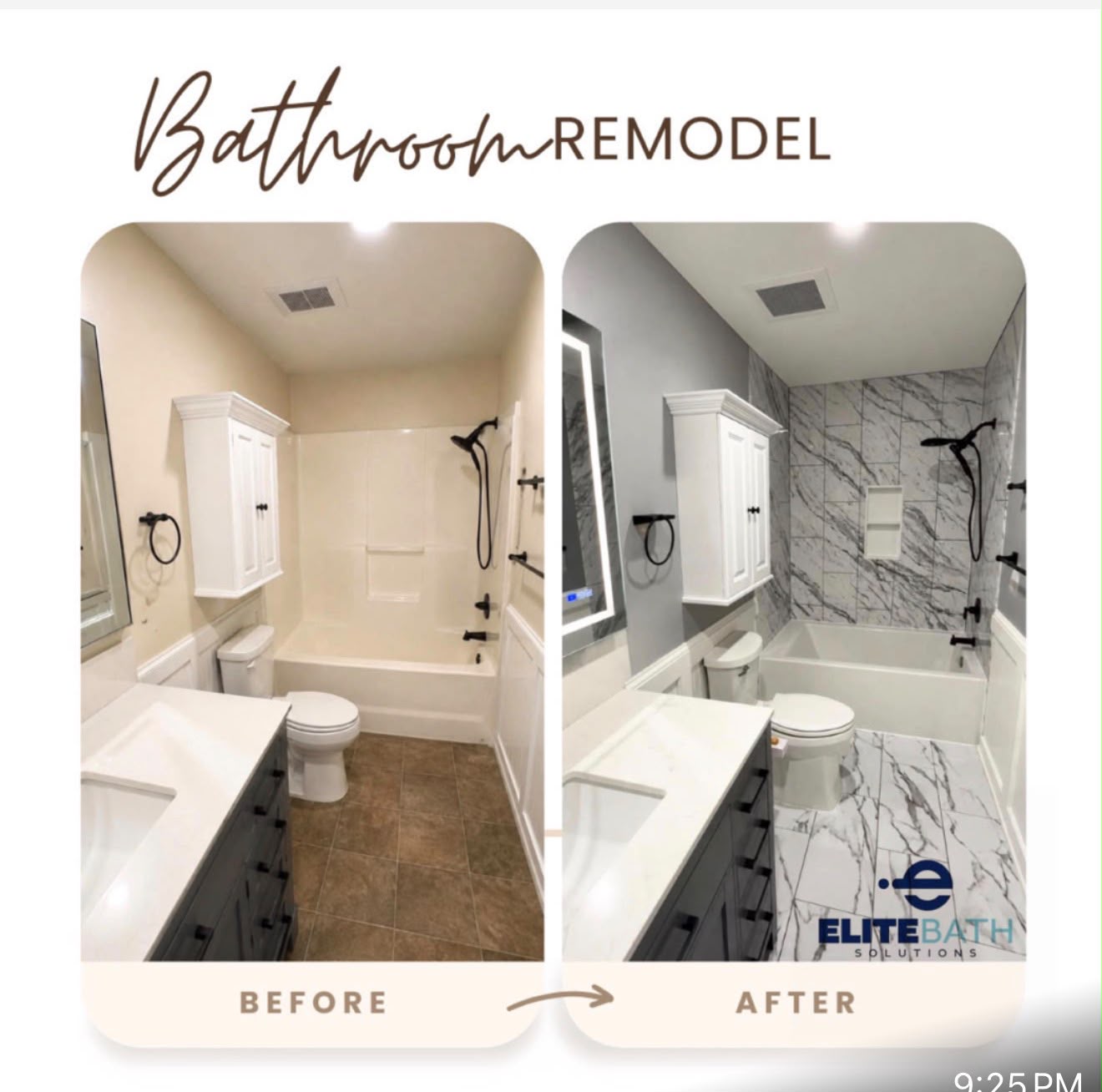
Projects that focus on practical, high-value improvements—such as tub-to-shower conversions, modern walk-in showers, frameless glass doors, grout-free wall systems, updated flooring, new vanities, and modern fixtures—can provide strong value without the significantly higher cost of an ultra-luxury renovation.
The most reliable way to establish a realistic bathroom remodeling budget is to define the improvements you need, choose materials that fit your priorities, and request a detailed estimate from a local Atlanta bathroom remodeling professional.
What Is a Realistic Budget for a Bathroom Remodel in 2026?
For many homeowners, a midrange budget is the most practical approach. It provides enough flexibility to replace aging fixtures and finishes while avoiding some of the costs associated with extensive structural changes and luxury materials.According to 2026 estimates published by This Old House, bathroom remodeling costs can fall between approximately $6,456 and $24,715, with an estimated average of $15,586. Its cost data also suggests that a midrange remodel of a 50-square-foot bathroom may cost approximately $14,609 to $19,040.
High-end renovations can move well beyond these figures. Premium materials, custom cabinetry, major plumbing work, structural alterations, and larger primary bathrooms can push the total budget above $25,000 or even considerably higher.Location also makes a substantial difference. For example, 2026 Angi estimates place the average bathroom remodel at approximately $13,129 in Atlanta and $20,124 in Los Angeles. These differences demonstrate why national averages should never be treated as guaranteed local prices.Therefore, rather than asking how much a bathroom remodel “should” cost everywhere, homeowners should establish a budget based on the specific project and local construction market.
How Bathroom Remodel Scope Affects Your Budget
The scope of your renovation will usually have a greater impact on the total cost than almost any individual product you purchase. A cosmetic bathroom refresh is fundamentally different from a complete renovation. If you are painting walls, replacing lighting, installing new hardware, and updating a few fixtures, your budget may remain relatively manageable
A full remodel can involve demolition, new flooring, a replacement vanity, updated plumbing fixtures, a new tub or shower, waterproofing, tile work, lighting, ventilation, and professional installation. Each additional trade and material increases the overall project cost.
The budget can rise further when the bathroom layout changes. Moving a toilet, shower, bathtub, or sink may require plumbing lines to be relocated. Walls may need modification, and electrical or ventilation systems could also require updates.If your existing layout functions well, keeping major fixtures in their current locations is often one of the most effective ways to control bathroom renovation costs.
Setting a Budget for a Basic Bathroom Refresh
Not every bathroom needs a complete remodel.If the room is structurally sound and the major fixtures remain functional, a basic refresh can improve its appearance without the cost and disruption of rebuilding the entire space.
A limited project might involve repainting the walls, replacing a mirror, updating lighting, installing new cabinet hardware, refreshing sealant, or replacing selected fixtures. The exact cost will depend on the number and quality of improvements.
However, homeowners should be careful when comparing a cosmetic refresh with published averages for full bathroom remodeling. A project that changes only surface finishes cannot reasonably be compared with one involving demolition, waterproofing, plumbing, electrical work, and professional tile installation.Before setting your budget, decide whether your bathroom genuinely requires renovation or simply needs targeted improvements.
What Is a Realistic Midrange Bathroom Remodeling Budget?
For homeowners seeking a substantial transformation without creating a luxury bathroom, a midrange renovation often provides the most balanced approach. A midrange bathroom remodel might include a new vanity, updated faucets, a replacement toilet, new flooring, modern lighting, refreshed wall finishes, and improvements to the shower or bathtub area. The existing layout is often retained to keep construction complexity under control.
Based on current national estimates, a budget in the mid-teens to low-$20,000 range can be a reasonable planning starting point for many professionally completed midrange projects. However, local prices can fall below or rise significantly above that level.The important word is starting point. No national cost estimate can account for the condition of your specific bathroom, the materials you choose, or local contractor pricing.For a reliable figure, homeowners should request itemized estimates based on a clearly defined project scope.
How Much Should You Budget for a High-End Bathroom Remodel?
A high-end bathroom renovation can cost $25,000, $35,000, or substantially more depending on the size and complexity of the project.These projects often involve custom vanities, premium countertops, extensive tile work, custom showers, higher-end fixtures, significant layout changes, and specialized features. Large primary bathrooms also require more flooring, tile, cabinetry, and labor than smaller bathrooms.
Current cost estimates from This Old House place some high-end remodels of a 50-square-foot bathroom at approximately $27,492 to $35,808. This should not be considered an upper limit. Large luxury bathrooms with extensive custom work can cost considerably more.
At this level, careful planning becomes especially important. A small design change made after construction begins can affect several trades and create additional labor and material expenses.
The Main Factors That Determine Bathroom Remodeling Costs
Bathroom size is an obvious cost factor, but square footage alone does not determine the final price.The complexity of the work matters considerably. A small bathroom with custom tile and relocated plumbing can cost more than a larger bathroom receiving relatively simple surface updates.
Labor is another major consideration. Bathroom renovations frequently require several skilled trades, potentially including plumbing, electrical work, carpentry, tiling, and painting. Angi’s 2026 city-level cost guides estimate that labor can represent roughly 40% to 60% of the total remodeling budget in some markets.
Materials can also change the project cost dramatically. Standard ceramic or porcelain tile, stock vanities, and widely available fixtures generally cost less than natural stone, custom cabinetry, and premium plumbing products.
Finally, the condition of the existing bathroom can affect the budget. Problems such as hidden water damage or outdated systems may not become fully apparent until demolition begins.
Why Moving Plumbing Can Increase Your Bathroom Remodel Budget
Keeping the existing layout is often one of the most effective ways to manage remodeling costs.When a toilet, sink, bathtub, or shower remains in approximately the same position, contractors may be able to work with existing plumbing connections. Relocating these fixtures can require new supply lines, drainage work, opening walls or floors, and additional repairs once the plumbing work is complete.
The exact cost depends heavily on the home’s construction and the accessibility of existing pipes.Moving plumbing should not automatically be avoided. Sometimes changing the layout creates a significantly more functional bathroom. However, homeowners working with a limited budget should understand the potential financial consequences before approving a new floor plan.
Ask your contractor to explain how much of the estimate relates specifically to layout changes. This can help you determine whether the additional functionality justifies the expense.
How Materials Influence a Realistic Bathroom Renovation Budget
Material selection is one of the areas where homeowners have considerable control over spending.Two bathrooms with nearly identical layouts can have very different project costs simply because of the products selected. A stock vanity, for example, generally costs less than custom-built cabinetry. Standard tile can be more affordable to purchase and install than intricate patterns or premium natural stone.
The same principle applies to faucets, toilets, shower systems, countertops, mirrors, and lighting.However, choosing the least expensive option for every product is not necessarily the best budgeting strategy. Bathrooms experience regular moisture and frequent use, so durability, installation requirements, and maintenance should be considered alongside the initial purchase price. A realistic budget should balance appearance, performance, and cost rather than focusing exclusively on the lowest possible upfront price.
How Much Should You Set Aside for Unexpected Bathroom Remodeling Costs?
Unexpected expenses are one reason a bathroom remodeling budget should not be built around spending every available dollar on planned work. Bathrooms contain plumbing, electrical systems, and moisture-sensitive building materials. Once walls, flooring, or old fixtures are removed, contractors may discover conditions that were not visible during the initial inspection. This does not mean every renovation will uncover serious problems. However, creating a financial contingency can prevent an unexpected repair from immediately putting the project over budget.
Many homeowners choose to keep approximately 10% to 20% of their planned construction budget available as a contingency, with older homes or projects involving substantial demolition potentially requiring greater caution.For example, if your planned work is estimated at $15,000, you might avoid treating the entire $15,000 as your maximum available funds. Keeping additional money available for legitimate unforeseen work can provide greater financial flexibility.
Any contingency percentage should be treated as a planning guideline rather than a prediction of what you will actually spend.
Don’t Forget Permits and Professional Fees
A realistic bathroom remodel budget should include more than fixtures and construction materials.Depending on your location and project scope, permits may be required for certain plumbing, electrical, or structural work. Building requirements differ between jurisdictions, so homeowners should verify local rules rather than assume a permit is or is not necessary.
Larger projects may also involve design services, engineering, inspections, or other professional costs.When comparing contractor estimates, determine exactly what each quote includes. One estimate may include demolition, waste removal, permits, and finishing work, while another may exclude some of these expenses.Comparing only the final number without reviewing the scope can therefore create a misleading impression about which estimate offers better value.
Can You Remodel a Bathroom for $10,000?
A $10,000 bathroom remodel is possible in some circumstances, but the scope will need to match the budget.A small bathroom with an efficient existing layout may be renovated within this amount using standard materials and carefully controlled improvements. However, completing an extensive professional renovation for $10,000 can be difficult in higher-cost markets or when significant plumbing, electrical, waterproofing, or structural work is required.
Homeowners working with this budget should prioritize the elements that need replacement most urgently.Keeping the existing floor plan, selecting readily available fixtures, limiting custom work, and avoiding unnecessary structural changes can help control costs.The best approach is to obtain local quotes before deciding what a particular budget can realistically achieve.
Is $20,000 a Good Budget for a Bathroom Remodel?
For many projects, $20,000 can provide a reasonable budget for a professionally completed midrange bathroom remodel, particularly when the existing layout remains largely unchanged.
However, $20,000 will go much further in some markets than others.Current 2026 estimates illustrate these regional differences clearly. Angi places average bathroom remodeling costs at around $12,000 to $13,000 in several U.S. cities, while its Los Angeles estimate is above $20,000.
The bathroom’s size also matters. A $20,000 budget for a compact guest bathroom provides different possibilities from the same budget for a large primary suite.Rather than deciding whether $20,000 is universally “enough,” homeowners should determine what work can realistically be completed for that amount in their local area.
How to Build a Realistic Bathroom Remodeling Budget
Start by separating essential work from optional upgrades.Necessary repairs, waterproofing, plumbing, electrical work, and functional fixtures should usually receive priority. Decorative features can then be selected according to the remaining budget.
Next, define the project scope before requesting contractor estimates. Contractors cannot provide truly comparable quotes if each professional is pricing a different version of the project.
When reviewing estimates, look beyond the total price. Check what is included for demolition, materials, labor, permits, waste disposal, and finishing work.
It is also wise to make important product selections before construction begins whenever possible. Changing materials or design decisions midway through a renovation can affect costs and project schedules.Finally, maintain a contingency rather than allocating every available dollar to the initial scope.
Where Should You Spend and Where Can You Save?
A practical remodeling budget does not require spending equally on every part of the bathroom.Areas related to water management and safety deserve particular attention. Proper waterproofing, reliable plumbing, suitable ventilation, and quality installation can be more important in the long term than expensive decorative finishes.
You may be able to control spending by selecting standard-size fixtures, keeping the existing layout, choosing durable midrange materials, and limiting custom features.However, homeowners should be cautious about reducing costs by attempting specialized work without the necessary skills. Plumbing, electrical, waterproofing, and structural work can create serious problems when completed incorrectly and may be subject to local codes or permit requirements.Saving money is useful only when it does not compromise the function, durability, or safety of the finished bathroom.
So, what is a realistic budget for a bathroom remodel? Based on current 2026 national cost estimates, many professionally completed projects fall somewhere between approximately $6,500 and $25,000, while the estimated national average is around $15,600. High-end and highly customized renovations can cost $30,000 or considerably more.These figures should be used for initial planning rather than as guaranteed prices.
Your actual bathroom remodel budget will depend on the size of the room, your location, labor rates, material choices, the condition of the existing space, and whether you plan to change plumbing or the layout.The most reliable budget is one based on a clearly defined scope and detailed local estimates. It should cover the planned construction work while also leaving reasonable financial room for genuine unexpected conditions.
Instead of starting with the question, “How much can I spend?” consider asking, “What does this bathroom actually need?” That distinction can help you create a renovation plan that is financially realistic and focused on the improvements that matter most.
Frequently Asked Questions
What is a realistic budget for a bathroom remodel?
Current 2026 national estimates suggest that many bathroom remodels cost approximately $6,500 to $25,000, with an average near $15,600. However, location, bathroom size, materials, labor, and project scope can move the final cost significantly above or below this range.
Is $10,000 enough to remodel a bathroom?
It can be enough for some smaller or more limited bathroom renovations, particularly when the existing layout remains unchanged. A complete professional remodel may exceed $10,000 when significant plumbing, tile, electrical, or structural work is required.
Is $20,000 enough for a full bathroom renovation?
A $20,000 budget can be realistic for many midrange projects, but there is no universal answer. The amount of work possible will depend on local labor costs, bathroom size, material choices, and the condition of the existing space.
What is the most expensive part of remodeling a bathroom?
There is no single component that is always the most expensive. Labor, custom tile work, shower construction, plumbing changes, cabinetry, and premium materials can all represent significant portions of the budget depending on the project.
How much extra money should I keep for unexpected costs?
A contingency of roughly 10% to 20% is a commonly used planning approach, although the appropriate amount depends on the age and condition of the home and the complexity of the renovation.
How can I reduce my bathroom remodeling costs?
Keeping the existing layout, limiting plumbing relocation, selecting durable midrange materials, avoiding unnecessary custom features, and defining the project scope before construction begins can help control costs.
Why do bathroom remodeling costs vary so much by location?
Labor rates, material costs, permit requirements, contractor availability, and general construction costs differ between markets. As a result, the same renovation can have substantially different prices in different cities or regions.