A shower can look sharp on day one and still become a daily frustration if the wall panels were the wrong choice. Homeowners usually notice it later – when grout lines stain, textured surfaces trap soap film, or a once-trendy finish starts to date the entire bathroom. If you are wondering how to choose shower wall panels, the best approach is to look past color alone and focus on how the material will perform in your home, with your routine, for years.
The right panel system should do more than cover the wall. It should resist water, clean up easily, fit the scale of your space, and support the kind of bathroom experience you want – whether that means a polished modern shower, a safer aging-in-place upgrade, or a fast remodel with minimal disruption.
How to Choose Shower Wall Panels for Real Life
Many homeowners begin by comparing looks, but long-term satisfaction usually comes down to maintenance, durability, and installation quality. A panel that appears beautiful in a showroom may not be the best fit for a busy family bathroom. On the other hand, a practical low-maintenance panel can still deliver a high-end finish if the design options are strong.
Start by thinking about how the shower is actually used. Is this the primary bath for a couple getting ready every morning, a guest bath that sees lighter use, or a space being updated for better accessibility? The answer affects everything from panel size to finish to how much texture makes sense.
If you want a clean, contemporary look with fewer places for grime to collect, large-format wall panels are often the smarter choice than small tile. Fewer seams usually mean easier upkeep. That matters even more in households where convenience is part of the reason for remodeling in the first place.
Compare Shower Wall Panel Materials
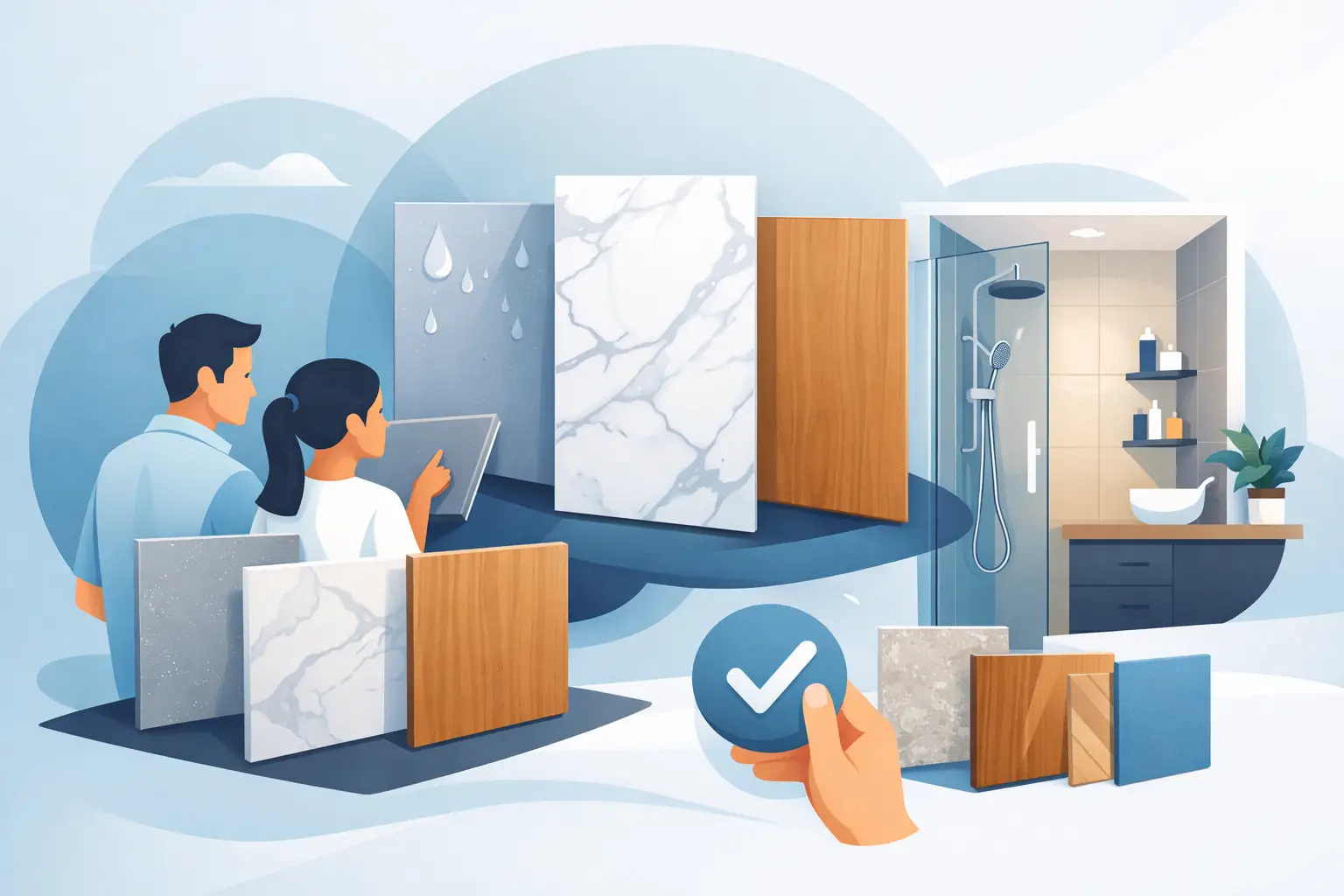
Material is the first major decision because it influences price, appearance, weight, maintenance, and longevity. There is no single best material for every home. There is only the one that best matches your priorities.
Acrylic panels
Acrylic is popular for a reason. It is lightweight, waterproof, and easy to maintain. It also tends to support quicker installations, which appeals to homeowners who want a fast transformation without having their bathroom out of service for long.
Acrylic often works well for busy households, tub-to-shower conversions, and accessible shower upgrades because the surfaces are smooth and easy to wipe down. The trade-off is that not every acrylic panel has the same visual depth or premium feel, so product quality matters.
PVC and composite panels
PVC and other composite wall systems can offer good water resistance and lower maintenance than tile. Some are designed to mimic stone or tile patterns without the upkeep that comes with grout-heavy installations.
These can be a strong value option, but appearance varies widely by manufacturer. Some look upscale and refined. Others can look more builder-grade. If design is a top priority, it helps to see full-size samples rather than relying on small swatches.
Solid surface and engineered stone looks
If you want a more luxurious, substantial feel, solid surface or premium composite panels are worth a close look. These products often deliver a clean, custom appearance with excellent durability and a more elevated finish.
They usually come at a higher price point, but many homeowners feel the investment is justified by the style, performance, and long-term confidence they provide. For a primary bathroom remodel, this category often makes sense when the goal is both beauty and value.
Think Beyond Color and Pattern
The best-looking shower wall panel is not always the one with the boldest pattern. In many bathrooms, especially smaller ones, simpler finishes create a more expensive and timeless result.
Light tones can make a shower feel more open. Soft marble looks, warm neutrals, and clean white finishes remain popular because they pair well with changing hardware, paint, and flooring trends. If resale matters, classic usually beats highly specific.
Texture is another detail worth slowing down for. A deep texture may add visual interest, but it can also create more cleaning work. Smooth or lightly textured surfaces tend to give homeowners the best balance of style and practicality.
If your bathroom has limited natural light, pay attention to how the panel finish reflects light. Some glossy surfaces brighten the room beautifully. Others may show water spots more easily. Matte and satin finishes can be more forgiving, though they may create a softer visual effect.
Size, Layout, and Seam Placement Matter
One of the biggest advantages of shower wall panels is the ability to reduce grout lines and seams. That benefit is strongest when the panel size fits the shower layout well.
Large panels can make the space look cleaner and more upscale. They also reduce places where moisture and buildup can collect. But larger is not automatically better if the shower has awkward corners, built-in features, or a complex footprint. In those cases, the installer’s plan matters just as much as the product itself.
Ask where seams will land and how corners, niches, and fixture cutouts will be handled. A beautiful panel can lose its impact if the layout looks pieced together. A well-designed installation should feel intentional, balanced, and tailored to the space.
This is especially important in walk-in showers and tub-to-shower conversions, where wall height and opening visibility make every design choice more noticeable.
Match the Panels to Your Maintenance Expectations
Homeowners often remodel because they are tired of scrubbing old tile and grout. If low maintenance is one of your main goals, be honest about it early.
Choose a nonporous panel system that is designed to resist moisture, mildew, and staining. Fewer seams and smooth surfaces generally mean less daily upkeep. That can be a major quality-of-life improvement, especially for older homeowners, busy families, or anyone who simply wants the bathroom to stay looking fresh with less effort.
This is one of those areas where a specialist can help you avoid a mismatch. A panel that looks impressive but demands more care than you want to give it is not the right panel for your home.
Don’t Overlook Safety and Accessibility
When homeowners think about shower wall panels, they often focus on appearance first. But if the remodel is also about comfort, mobility, or aging in place, the panel choice should support those goals.
Wall panels should work well with grab bars, built-in seating, low-threshold entries, and easy-to-clean designs. Smooth, durable surfaces are often ideal in accessible showers because they help create a cleaner, simpler environment without unnecessary visual clutter.
If the bathroom is being updated for a parent, for long-term planning, or for safer daily use, choose a panel system that supports the entire shower design – not just the walls themselves.
Installation Quality Is Part of the Product
Even the best panel material can underperform if it is installed poorly. Water management, wall prep, fit, sealing, and finishing details all affect how the shower performs over time.
That is why it pays to work with a bath specialist instead of treating shower wall panels like a basic off-the-shelf purchase. An experienced installer understands how to integrate the panels with the shower base, fixtures, storage features, and waterproofing system so the finished result looks polished and lasts.
For many Atlanta-area homeowners, speed matters too. A streamlined professional installation can shorten disruption and deliver the kind of clean, finished look that is hard to achieve with a piecemeal approach. Companies like Elite Bath Solutions build their process around that balance of quality, efficiency, and long-term peace of mind.
How to Choose Shower Wall Panels Without Regret
If you want to feel good about the decision years from now, ask a few simple questions. Will this material still look good with everyday use? Will it be easy to clean in real life, not just in theory? Does the style suit the whole bathroom, or just stand out on its own? And is the installation plan as strong as the product itself?
The best shower wall panels are the ones that fit your home on every level – visually, practically, and financially. Some homeowners should prioritize premium finishes. Others should prioritize speed, simplicity, and low maintenance. Both can be smart decisions when they match the way the bathroom needs to function.
A shower remodel should make life easier, not just prettier. When you choose wall panels with that in mind, you are far more likely to end up with a space that feels clean, current, and comfortable every single day.